

A simpler weekly routine starts by reducing friction, not buying a planner or copying someone else’s schedule. Look at the tasks that repeatedly make your week difficult, then choose a small change using resources you already have.
Map the commitments before adding habits
Begin with work, school, care, appointments and essential travel. Include preparation and recovery time where relevant. A thirty-minute appointment may take much longer once travel, waiting and getting ready are included.
Notice the busiest transitions. Perhaps dinner becomes difficult after a late pickup, or shopping keeps moving to the end of a tiring day. Choose one recurring problem instead of reorganizing the entire household at once.
Make room for basic needs
Food, rest, medication as prescribed, hygiene and essential care need a place in the week. A routine that looks efficient but leaves no room for these needs is unlikely to be useful.
Do not fill every available gap. Leave some flexibility for delays and changing energy. The right amount depends on your circumstances, not a universal productivity rule.
Reduce one repeated decision
A simple default can help when the same question returns every day. You might choose two easy meals from ingredients you already use, put essential school items in one place or decide a regular time to check appointments.
- Choose a default that solves an actual problem.
- Keep it flexible enough for different needs.
- Use existing supplies before buying replacements or organizers.
- Stop a system that creates more maintenance than it saves.
A notebook, shared calendar or ordinary phone reminder may be enough. You do not need all three.
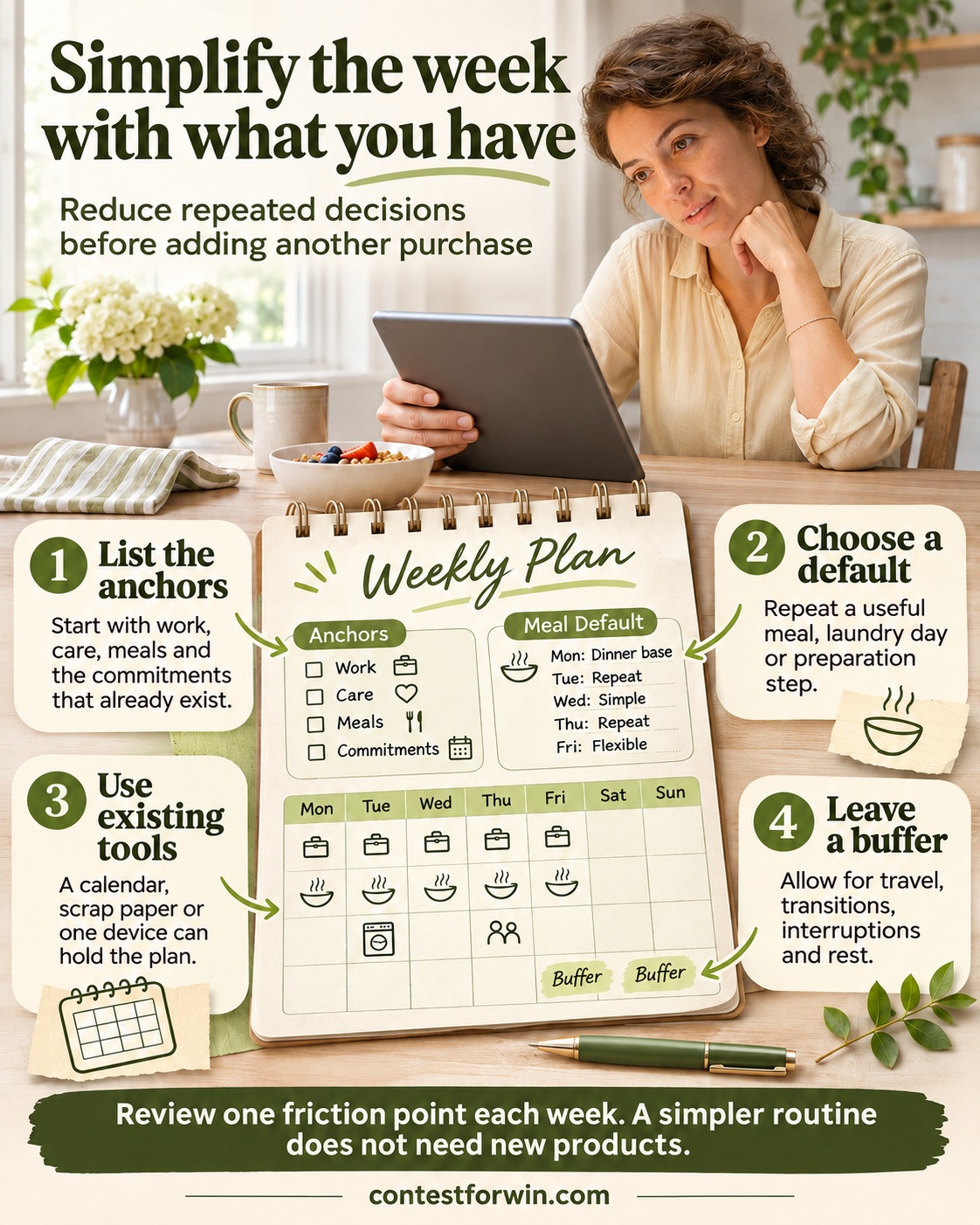
Read the visual guide as text
- List the anchors. Start with work, care, meals and the commitments that already exist.
- Choose a default. Repeat a useful meal, laundry day or preparation step.
- Use existing tools. A calendar, scrap paper or one device can hold the plan.
- Leave a buffer. Allow for travel, transitions, interruptions and rest.
Review one friction point each week. A simpler routine does not need new products.
Look at spending without turning simplification into shopping
Review which purchases were responses to being rushed, such as repeated last-minute meals or duplicate supplies. Identify one avoidable pattern if there is one; do not assume every convenience purchase is wasteful.
Set a realistic limit for any change. Before buying a subscription, container or device, ask what exact problem it solves and whether something you own already meets the need. A new system has costs in money, setup and attention.
Combine tasks only when it really helps
Grouping errands may reduce travel, but a long trip can also be exhausting or difficult with children. Compare the whole cost: time, transport, access, energy and any support required.
If several people share a household, discuss the full responsibility for recurring tasks. Planning and remembering are work too. “You own the grocery task this week” needs clearer terms than “Help me more.”
Create a smaller version of the week
Decide what can change during illness, overtime or a demanding period. The fallback might use easier meals, postpone nonessential cleaning or reduce optional activities.
Protect essential care while lowering standards that can safely wait. A difficult week is not the time to demand that every new habit continue unchanged. Where the workload remains impossible, practical help may matter more than a better schedule.
Try one change and review it
- Name the recurring difficulty.
- Choose one small change with little or no cost.
- Decide who is responsible and when it will happen.
- Try it during an ordinary week.
- Ask whether it saved effort, cost too much or needs adjusting.
You do not need to keep a detailed record unless it helps. A short conversation may be enough. Keep what makes life easier, remove what does not, and resist adding more features to a routine that already works.
A simpler week is one that fits the people living it. Start with the point of greatest friction and make it a little more manageable.