

Sometimes you reach for a snack because it tastes good, because it is part of a celebration or because it feels comforting after a long day. If eating feels automatic or regularly leaves you uncomfortable or distressed, start by noticing what tends to happen before and after. You can do that without counting calories or judging individual foods.

Notice the circumstances around eating
Ask yourself when you last ate and what was happening just before you reached for food. Perhaps you worked through lunch, sat down after a tense conversation or finally had a quiet moment. Hunger can be easy to miss when you’re busy. If you’re hungry or unsure after a long gap between meals, it’s reasonable to eat.
Make meals easier to get to
If long stretches without food are common, try planning one meal or snack around the point in your day when you usually get busy. Keep something you enjoy and can access within reach. For example, pack a snack before an evening shift or set aside enough time to eat during your lunch break.
Give yourself another way to respond to stress
When you recognize a difficult feeling, ask what else would help alongside food or in that moment. You might step away from a screen, text someone or take a few quiet minutes before starting the next task. If the pressure is constant, consider one change to the source of the stress. These practical ideas for stressful days can help you find a starting point.
Look at the whole day before judging the evening
Imagine you ate a small breakfast, worked through lunch and found yourself snacking while making dinner. Hunger and stress can show up together. Have something to eat if you need it and ask what would make getting food earlier easier next time. A meal you can grab quickly may solve part of the problem.
Now imagine you’ve eaten and still want the taste of a favorite snack. Enjoying food is an ordinary reason to eat. If you repeatedly feel unable to control eating or feel distressed about it, tell a qualified healthcare professional what happens.
Read the infographic in text
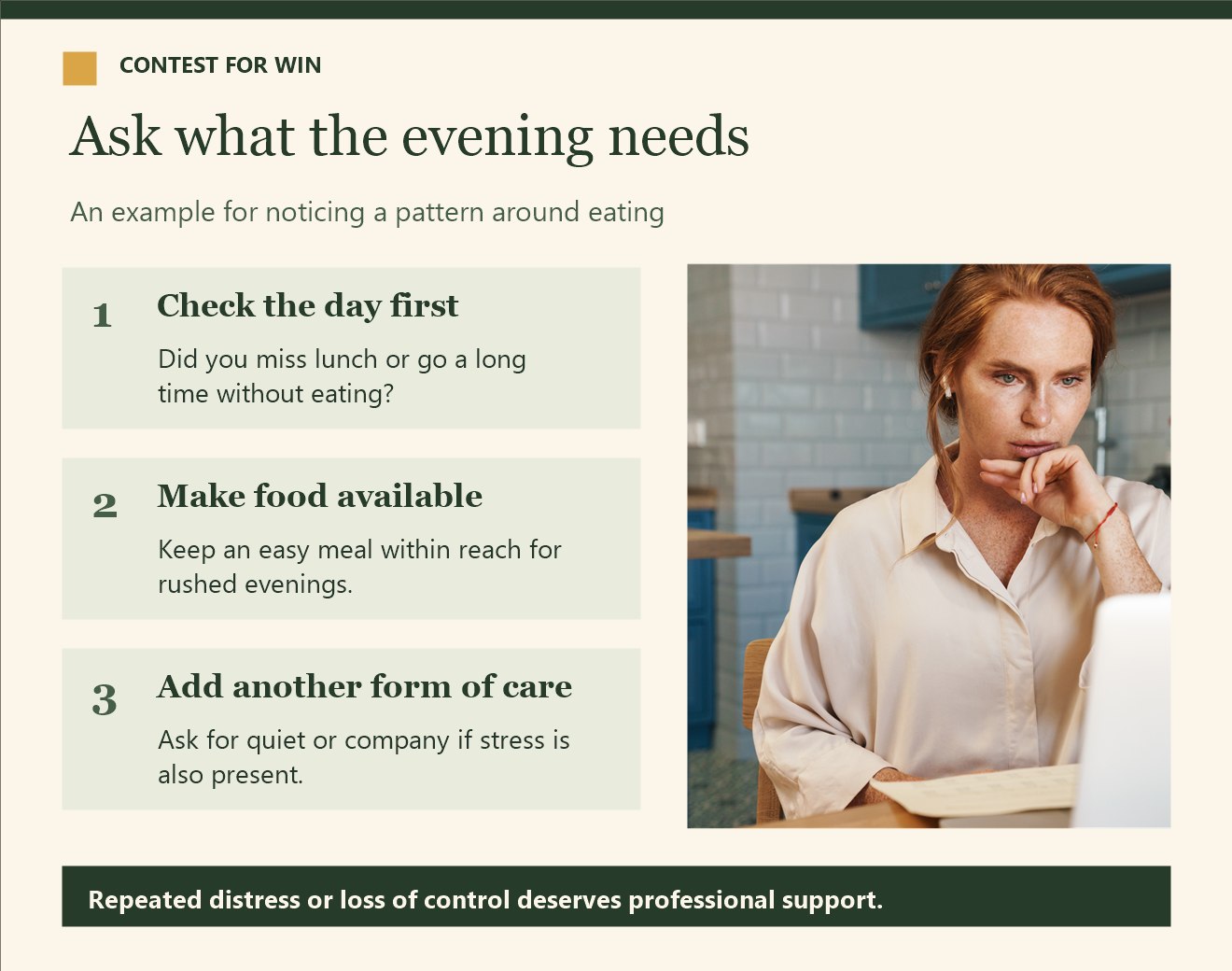
Ask what the evening needs
An example for noticing a pattern around eating
- Check the day first Did you miss lunch or go a long time without eating?
- Make food available Keep an easy meal within reach for rushed evenings.
- Add another form of care Ask for quiet or company if stress is also present.
Repeated distress or loss of control deserves professional support.
Know when to ask for help
If you repeatedly feel unable to stop eating, eat in secret or feel deeply distressed afterward, talk to a health professional with experience in eating disorders. You can start with a plain description of what happens and how often. The National Institute of Diabetes and Digestive and Kidney Diseases explains how clinicians assess binge eating disorder. The NHS treatment overview describes how regular meals and snacks can form part of care.