

A low-spend weekend starts with one thing you want to do and what the whole outing will cost. Keep room for transport, food and a plan you can change if the weather or your energy shifts.
Choose what you want from the weekend
Figure out what you want to do. Do you want company, quiet, play, movement, or just a break from making decisions? If you have a weekend where you have to run a bunch of errands, it doesn’t give you rest, but an unplanned day might not help you get the connection that you’re looking for.
Pick one purpose instead of thinking that the weekend should be used to fix every part of the whole week. You can say something like, “I’d like to have a little company and go on an enjoyable outing.” This gives you a clear direction on what you’re looking for.
After you have an idea, look at all the things you could do with it. You might find a free but crowded event, which might not work for you if you need quiet time. A meal with a friend might give you more of what you’re needing than an expensive experience. You have the right to plan what fits your needs and your situation, and it shouldn’t be the one that seems most exciting.
Set the total before picking activities
Take time to look at the amount of money you can use after you pay your essentials and commitments. Decide if the weekend has enough spending allowance or if you need to use existing money only. According to MyMoney.gov’s spending guidance it recommends a spending plan and cautions against being persuaded by discounts to buy things you do not need. A deal still has to fit your plan.
You don’t have to share your financial situation with other people. You can just say something like, “I’m trying to keep this weekend inexpensive. Would you like to do something free or get food from home?” Setting clear limits makes picking what you’re going to do easier and reduces the chance of agreeing to something that costs too much for you.
Build around one activity
Creating a plan can be more fun if it doesn’t add a bunch of different commitments to one weekend. Pick an activity you want to do, then allow time for meals, travel, rest, and changes that could happen.
Maybe going out on a Saturday for a little time can be enough. If you do this, it doesn’t mean that Sunday has to be another big event to make the weekend count for something. You might choose to do an activity at home or just keep this time open for rest.
This is also a way to reduce spending that happens when you rush. Having too much on your schedule can cause you to make unplanned food purchases or transportation changes. The point isn’t to put down having a fun time, but to avoid building a plan that needs more money just to keep you moving. Having a slower idea might work better for you and your energy.
Read the visual guide as text
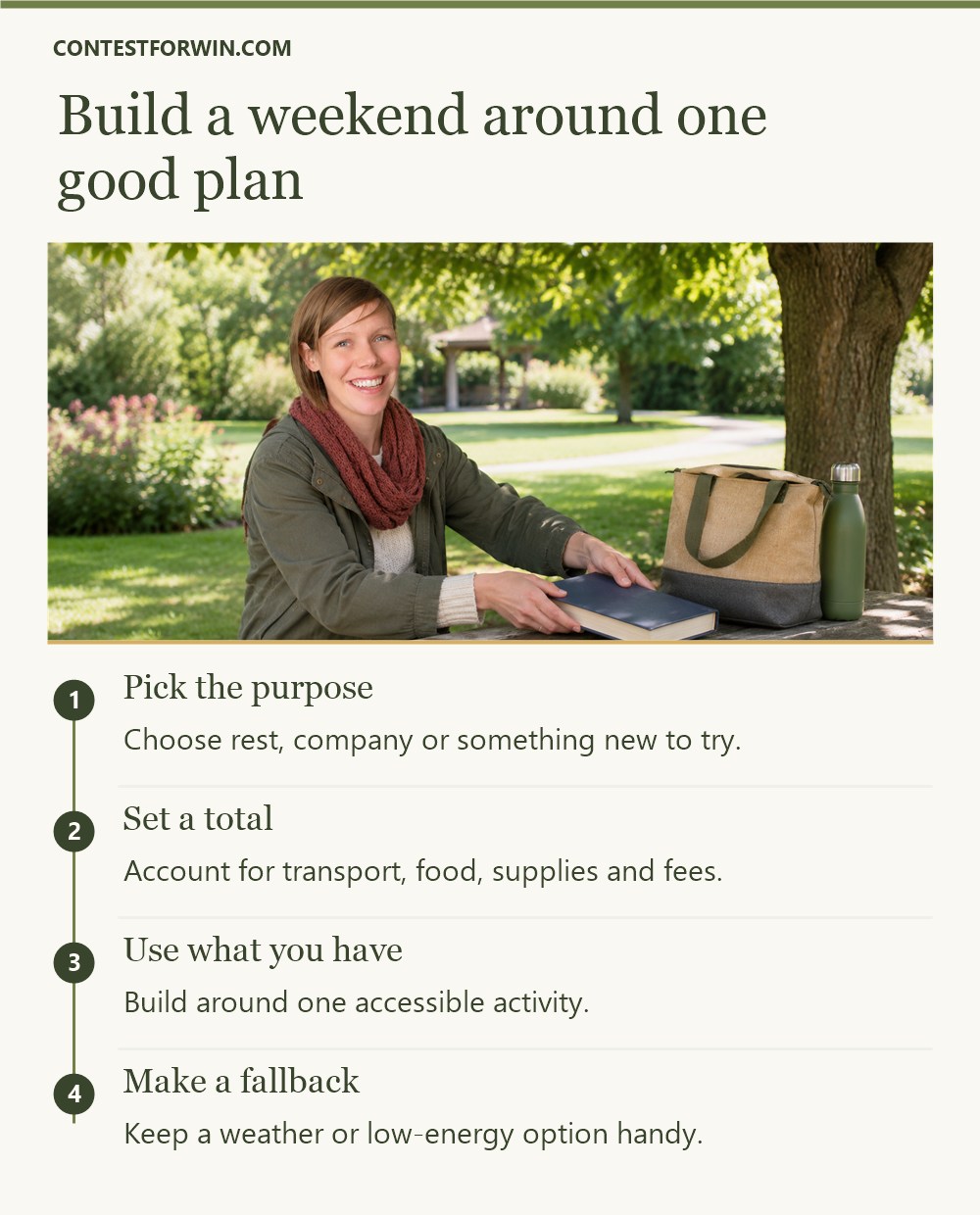
- Pick the purpose. Choose rest, company or something new to try.
- Set a total. Account for transport, food, supplies and fees.
- Use what you have. Build around one accessible activity.
- Make a fallback. Keep a weather or low-energy option handy.
Check local options before leaving
Places like libraries, community centers, public spaces, and local groups often have things you can do for free or things that don’t cost very much. Each town has different things you can do, so make sure you check the official information in your area. Pick something you’d like to do instead of just going because it doesn’t cost anything. A short visit can be fun if it works around your schedule and your energy.
Always think about where you’re going. Is there an accessible entrance, a place to rest, an easy-to-get-to bathroom, and a manageable noise level? Are you able to go back if the plans change? These are questions that should be part of your plan.
An activity can be affordable, but it also needs to be in the right situation for you. You shouldn’t compare yourself with someone whose location, transportation, and situation make different options available.
Make a low-pressure invitation
You can make plans with friends by just offering a couple of choices. You can say something like, “Would you like to take a walk and go hiking or play games at my house on Saturday?” This is easier to answer than just asking, “What do you want to do?”
If you’re planning on doing something outside the home, say what the costs are before you make a plan. If you’re sharing food, transportation, or other things, make sure you agree on who pays for what. Don’t just think that equally splitting the bill is going to be comfortable for everyone.
Give children a meaningful choice
Explain to your children what you’re going to do, but don’t make them responsible for worrying about the financial part of it. You can say something like, “We can choose to do one of these things today.” Offer choices that are available. One kid might want to visit the library or just enjoy doing a cooking activity with you at home.
Always include things like food, transitions, rest, and necessary care. An activity that says “free” can be hard if the day is too long or if you don’t really know what’s going on. You don’t need to have a big weekend theme planned to create a fun experience. A short activity that has the right expectation can be just as exciting. If a child gets disappointed about the limit, you can acknowledge it without promising to buy something you’re not going to be able to afford.
Make an example budget
If your weekend allowed you to spend $25 and you set aside $5 for travel, $8 for a shared meal contribution, $7 for an optional treat, and $5 as an extra just in case. This is just an example and doesn’t prove local prices, but the idea is to make sure you know how much money you can spend before the weekend, including costs that you might have overlooked.
If your travel ends up costing more than that, change your plan. You might pick somewhere closer to your home or get rid of optional purchases. You don’t need to borrow the difference just to keep your idea. A budget is a way to make your trade-offs more visible, and it should work with real costs instead of asking it to fit into an example.
Keep an easy fallback
Things like weather, sickness and transportation problems can change the plans. If this happens, pick an alternative that allows you to use what you already have.
If the purpose was to have some company, call a friend or ask them to come over. If the purpose was novelty, then pick a recipe you’ve never made before and try it out or watch a movie you have at your house.
Don’t just think that having a replacement has to be as exciting. A small plan can still be fun. The point of having an alternative plan is to not feel sad if something gets cancelled or if you have to substitute something. This allows you to rest if the change is because of a real need or if you need less activity.
Decide where the money will go before leaving
Write down the total available and mark the costs you have checked. If you’re taking children, offer two options that fit that number before you set out. The Consumer Financial Protection Bureau’s budgeting tools can help if you want to fit weekend spending into a larger plan.
Related reading. A Happier Life: Meaning, Connection and Manageable Changes.
Frequently asked questions
1. What are good low-spend weekend ideas?
Try a picnic from what you have, a library visit, a neighbourhood walk, a game afternoon or a potluck with an agreed budget.
2. What should I include in the budget?
Count transport, parking, food, admission and supplies. Check actual prices and hours before you set out.
3. How do I suggest a cheap plan to friends?
Offer a specific activity and give a clear estimate of the cost. For example, “Would you like to bring lunch for a picnic at the park?”
4. What if the weather ruins an outdoor plan?
Choose a backup in advance, such as a free library event, a game at home or a short indoor visit. Give your group a time to decide.
5. How can I make a low-spend weekend feel special?
Choose a detail to look forward to, such as a playlist, a favourite sandwich or time with someone you’ve been meaning to see.