

People often say “self-sabotage” when they repeat something that gets in the way of a goal they still want. It helps to describe the pattern before guessing why it happens. The obstacle could be fear, missing information, an overloaded schedule or a goal that no longer fits.
Find the point where the plan breaks down
Write down what you meant to do, what happened right before you stopped and what you did next. Look for a moment you could change. When a plan depends on free time you rarely have, the useful first move may be asking for time or reducing what the task requires.

Try a small test instead of a promise about willpower
Imagine you want to apply for training. Each time you open the form, you get stuck on the question about choosing a track. Set aside ten minutes to copy the question and ask the program contact which track fits your experience. When you have the answer, decide whether the training still makes sense.
Write what you’ll try if the same obstacle comes up. “If I stop at the same section tomorrow, I’ll mark the question and ask for the missing detail” gives you an action you can actually review. In the American Psychological Association’s interview on procrastination, researcher Fuschia Sirois explains why difficult emotions can make a task easy to put off.
Take responsibility without assigning yourself a character flaw
If your pattern is cancelling on friends, you might choose plans that fit your actual energy and let someone know early when you can’t make it. If a choice has hurt someone, acknowledge it without making them responsible for helping you change. A pattern that involves risky substance use or persistent distress deserves help suited to the situation.
Use the review to decide what to try next
Check the result. Did you get the missing information? Did you need more time or someone beside you? Work from what you learned. You can give up a goal that no longer fits and keep experimenting with a goal that still matters.
Read the infographic in text
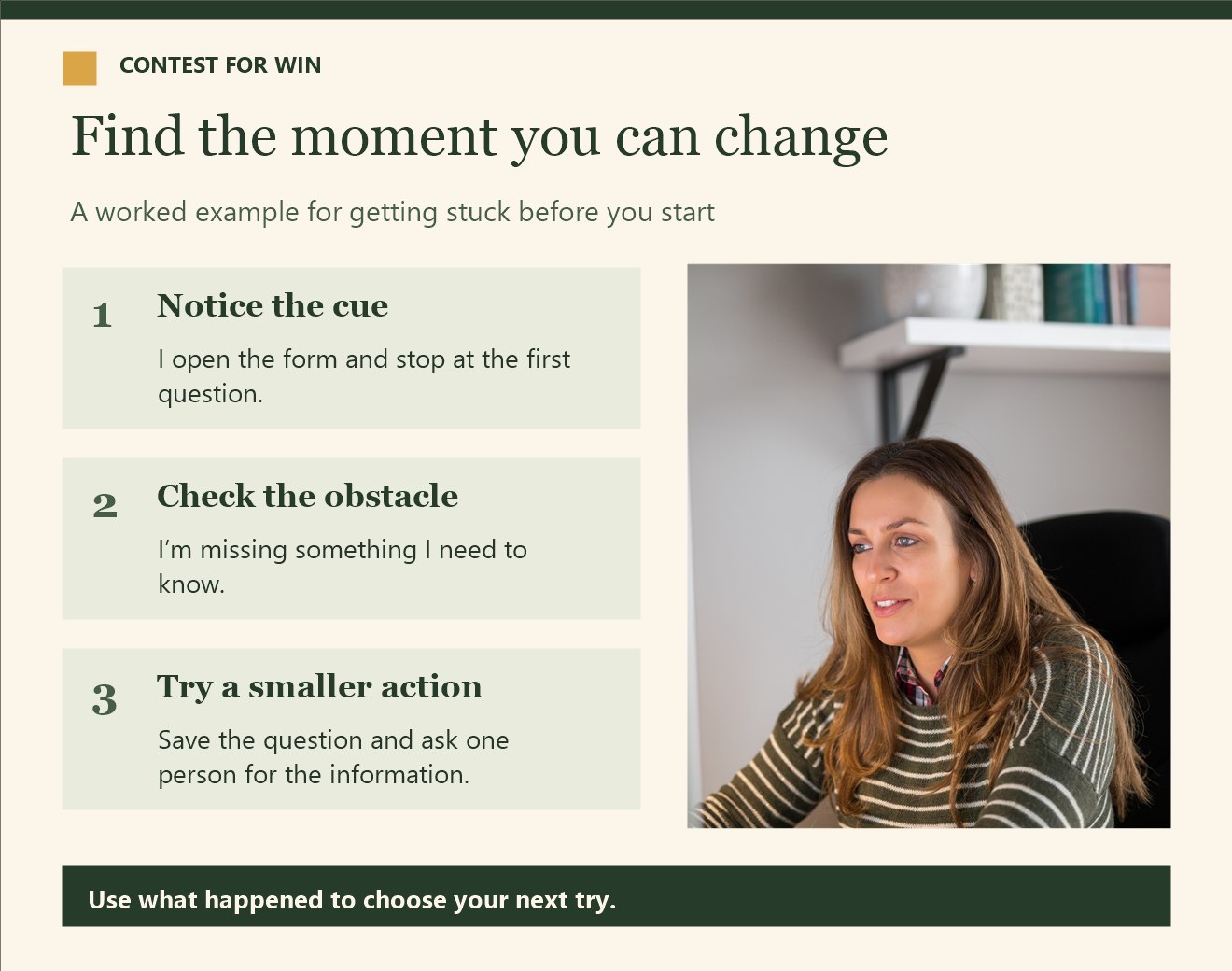
Find the moment you can change
A worked example for getting stuck before you start
- Notice the cue I open the form and stop at the first question.
- Check the obstacle I’m missing something I need to know.
- Try a smaller action Save the question and ask one person for the information.
Use what happened to choose your next try.
Frequently asked questions
1. Does procrastination always mean I’m sabotaging myself?
No. A task may be unclear, too large or competing with a more urgent need. Describe what keeps getting in the way before assigning a motive to yourself.
2. How can I tell whether I’m avoiding something or making a good decision to stop?
Ask whether the goal still matters and what staying would cost. Repeated avoidance often leaves a goal you value untouched. Choosing to stop can make sense if the goal is unsafe, unwanted or no longer feasible.
3. What is a useful first step when I keep avoiding a task?
Pick a step small enough to see yourself doing it, such as writing the first question or opening the file. Plan when you will try it and what you can do if the same obstacle appears.
4. What if the pattern involves someone else?
Take responsibility for choices you can change and respect the other person’s boundaries. If your actions hurt them, make a specific repair if contact is welcome. You can keep working on the pattern even if they choose distance.
5. When is it worth getting professional support?
If the pattern keeps affecting daily life, safety, substance use or important relationships, a qualified professional can help you understand what is happening and choose support that fits.