

Meditation can offer a way to pause and pay attention. Some people use it for reflection, some as part of a spiritual tradition, and others to explore a quieter moment in an ordinary day. You can decide whether a practice is useful to you without expecting it to transform your health or personality.
There is no requirement to stop thinking, sit on the floor or become a more outgoing person. Start with a modest aim, such as noticing how you feel before returning to a task. You can adapt the practice or choose another kind of break.
On this page
- Keep health expectations realistic
- Practise attention without grading yourself
- Bring consideration into everyday actions
- Include actual connection when you feel lonely
- Leave room for ideas without demanding results
- Explore spiritual meaning on your terms
- Try a short practice and review the experience

1. Keep health expectations realistic
Meditation includes different practices, and a short exercise is different from a structured treatment programme. The National Center for Complementary and Integrative Health’s overview describes possible benefits for concerns such as stress and sleep, while noting mixed findings and limitations in the research.
That does not establish that everyone will benefit or that meditation will cure an illness, correct digestion or replace care for a health concern. A comfortable pause can be worthwhile without carrying a medical promise. Keep appointments and prescribed treatment in view, and discuss health questions with an appropriate professional.
For everyday ways to respond to pressure, read Stressful Days: Small Pauses, Practical Changes and Support. Some difficulties need a change in workload or practical help as well as time to rest.
2. Practise attention without grading yourself
In a simple attention practice, you choose something to notice and return to it when you become distracted. A nearby sound or the feeling of a supported seat may suit you. Thoughts can appear without making the attempt a failure.
For example, you may notice that you are rehearsing an unfinished conversation. You can acknowledge the thought, return to your surroundings and decide later whether that conversation needs attention. You do not have to resolve it during the exercise.
A wandering mind is not a test of intelligence. Avoid treating one quiet session as proof that you have become smarter, more perceptive or better than someone who prefers another activity. Notice whether this particular practice gives you something useful today.
3. Bring consideration into everyday actions
You might use a pause to notice irritation before replying to a message. What happened? What do you need to say? Is this a good time to answer? Those questions can leave room for a deliberate response, but consideration still depends on what you do next.
Kindness can be concrete: listen without assuming, ask what help someone wants or acknowledge a mistake. You do not need to guess another person’s feelings through meditation. Ask, and respect what they choose to share.
Compassion also has limits. Supporting someone who is ill or distressed does not make you responsible for healing them. You can offer company or practical help while recognising when a concern needs qualified care.
4. Include actual connection when you feel lonely
Time alone may be welcome, but meditation is not a substitute for the company you want. Feeling lonely does not mean you have failed to find happiness within yourself or that your attitude is too negative.
A manageable next step might be messaging someone you know, attending an accessible activity or arranging a short conversation. A meditation group is one option if you enjoy it; a book group, shared hobby or informal meeting may suit you better.
Choose settings with clear expectations, respect for privacy and room to decline. You can leave a group that pressures you to disclose personal experiences, spend beyond your budget or accept an instructor’s claims without question. For practical openings, see Making Friends as an Adult: Small Openings and Mutual Interest.
5. Leave room for ideas without demanding results
A pause may give you time to notice a question or an idea that was lost in a busy day. You could keep a short note and return to it later. It is also fine if nothing interesting occurs.
If you are stuck on a project, consider a practical change: clarify the brief, look at an example, discuss the problem or leave it for a while. Meditation is one optional break, rather than a requirement for creativity or a guaranteed way to find the right answer.
Let a thought remain a possibility until you have checked it. An idea that feels clear during a quiet moment still needs to fit the facts, your resources and the people affected by it.
6. Explore spiritual meaning on your terms
If meditation belongs to your faith or spiritual practice, you may value it as a time for prayer, reflection or a sense of connection. You can respect that meaning while recognising that an inner impression does not verify another person’s thoughts, consent or future.
People who believe in psychic experiences may interpret a meditation differently from people who use a secular practice. Neither interpretation makes you obliged to act on a message or treat it as a fact. Important decisions can still include direct conversations and practical information.
You do not have to adopt a belief, buy particular objects or describe your experience as spiritual. Choose language and practices that fit you, and leave room to change your mind.
7. Try a short practice and review the experience
The NHS guide to mindfulness explains paying attention to the present and returning when the mind wanders. A short experiment can be enough to decide whether you want to continue:
- Choose a safe place where you can pause without missing something that needs your attention. Avoid practising while driving or operating equipment.
- Sit or rest in a comfortable, supported position. Keep your eyes open if you prefer; no special posture is required.
- Notice an ordinary sound, something nearby or your natural breathing if that feels comfortable. Let breathing stay unforced.
- When a thought appears, acknowledge it and return to what you chose to notice. End after a short period rather than pushing for a particular feeling.
Meditation can sometimes increase distress. Stop if you feel more anxious, upset or disconnected, and choose an ordinary activity or contact someone you trust. If the reaction persists or concerns you, discuss it with a qualified professional before trying again.
Afterward, ask whether you want another attempt, a different approach or another kind of break. The answer can change from day to day. You do not have to meditate to deserve rest, understand yourself or seek support.
Read the infographic in text
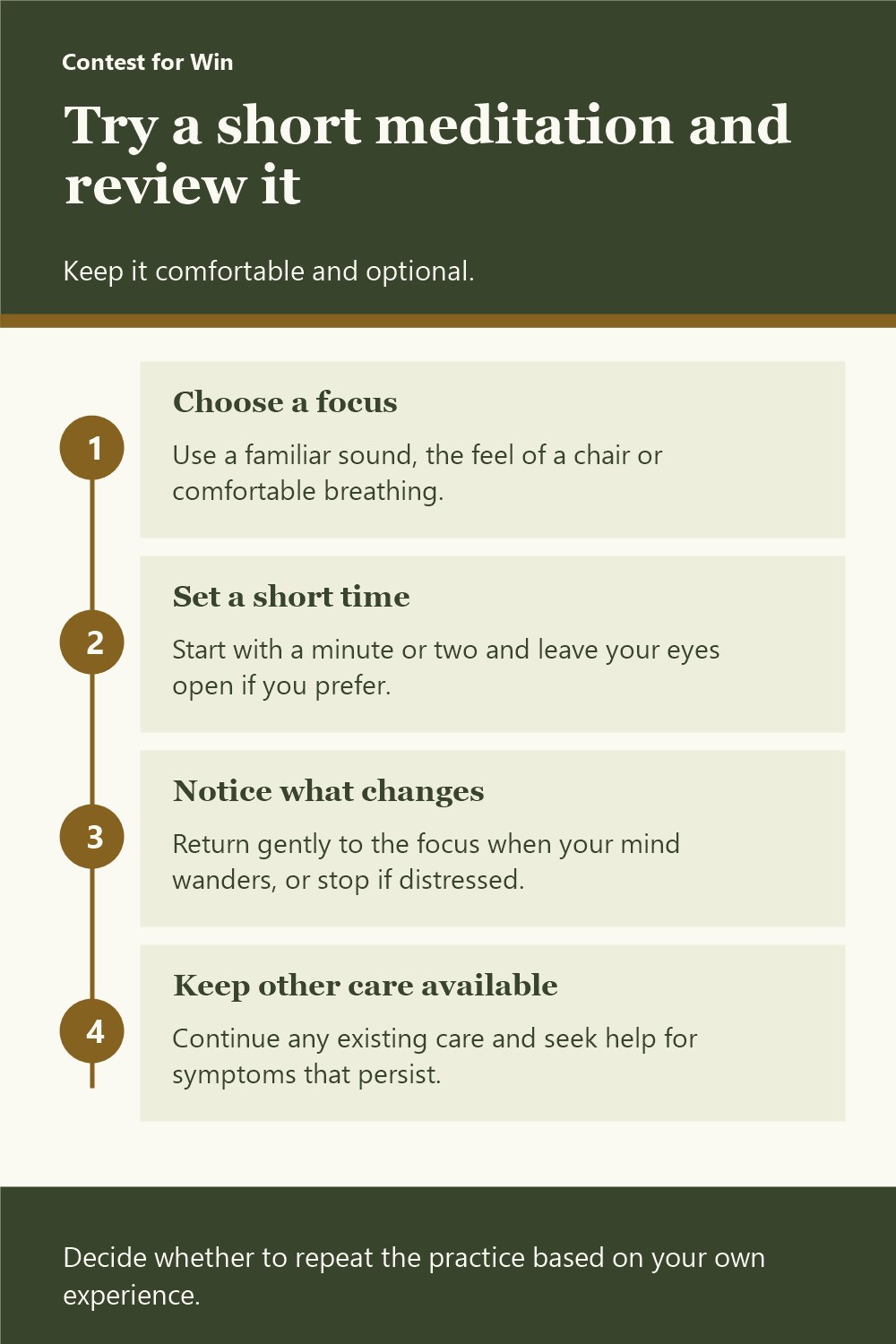
Try a short meditation and review it Keep it comfortable and optional.
- Choose a focus Use a familiar sound, the feel of a chair or comfortable breathing.
- Set a short time Start with a minute or two and leave your eyes open if you prefer.
- Notice what changes Return gently to the focus when your mind wanders, or stop if distressed.
- Keep other care available Continue any existing care and seek help for symptoms that persist.
Decide whether to repeat the practice based on your own experience.