

If you are living with depression or wondering whether you might be, it can be difficult to decide where to turn. You may value practical help, spiritual reflection, time with someone you trust or several kinds of support at once. You do not have to resolve every question about meaning before seeking care.
Depression is not evidence that you have failed to find your authentic self, think positively or clear an energy blockage. A difficult period deserves attention without an explanation that blames you.
On this page

Start with care and assessment
The National Institute of Mental Health explains that depression can affect daily activities and has several contributing factors. It is not limited to a particular generation or explained by one childhood experience. An article or a psychic reading cannot establish a clinical diagnosis.
If low mood, loss of interest or other changes persist or make daily life difficult, speak with a qualified healthcare professional. You can describe what has changed in sleep, energy, appetite, concentration or everyday tasks without diagnosing yourself.
Care can involve different treatment options depending on the person. Ask about the purpose of a recommendation, what follow-up involves and how to discuss concerns. If you already have a care plan, raise questions with your clinician before changing it.
Choose the place of spiritual support
If prayer, music, a faith community or a reflective reading feels meaningful, you can decide how it fits into your life. It may offer a space to express hopes or consider personal values. You do not need to abandon your beliefs to use healthcare.
Keep the purpose clear. Spiritual interpretation should not be presented as a medical assessment, an instruction to stop treatment or a promise that symptoms will disappear. You can find something meaningful and still ask whether it is helping you make practical choices.
You can also decline spiritual support altogether. The appropriate role for any optional practice is yours to choose, including choosing that it has no role at present.
Ask practical questions about any support
Before agreeing to a service, consider:
- What is being offered, and what does it cost?
- Can I stop or decline further sessions without pressure?
- Are my choices and privacy being respected?
- Is anyone promising certainty about my health or telling me to avoid professional care?
Claims that you must pay repeatedly to remove a hidden cause deserve caution. You do not owe a provider continued access to your time or money because they describe your situation in spiritual terms.
Ask for manageable help
You could ask a trusted person to sit with you while you arrange an appointment, help with transport or take one task off your list. A specific request can be easier to act on than trying to explain everything at once.
You are allowed to need support even if you can still work, smile or attend social events. You also do not have to prove that a mentor, friend or spiritual practitioner can solve the problem before considering clinical care. Different people can have different roles.
What you could say when you call for help
Write down one change you’ve noticed, how long you’ve noticed it and one way daily life has become harder. For example, “I’ve been sleeping poorly and avoiding plans for several weeks. I’m struggling to get through my shifts. Can I make an appointment to talk about what’s happening?” You can read the note word for word or ask someone you trust to sit with you while you call.
If spiritual support is important to you, tell the clinician what it gives you and ask how it might fit alongside care. You can also ask your community for something practical, such as a ride to an appointment or company after it.
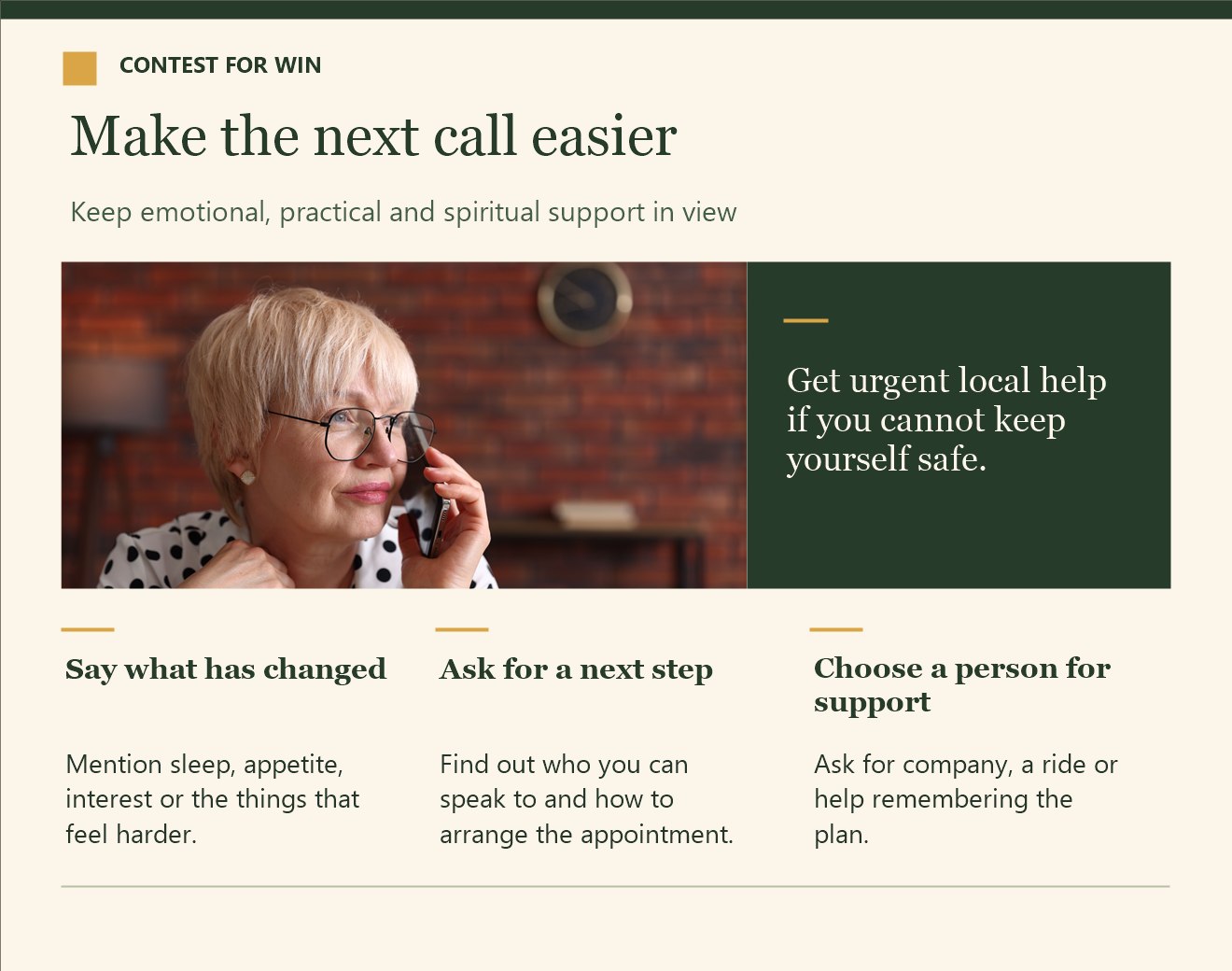
Read the infographic in text
Make the next call easier
Keep emotional, practical and spiritual support in view
- Say what has changed Mention sleep, appetite, interest or the things that feel harder.
- Ask for a next step Find out who you can speak to and how to arrange the appointment.
- Choose a person for support Ask for company, a ride or help remembering the plan.
Get urgent local help if you cannot keep yourself safe.
Know where to turn urgently
If you are thinking about suicide or cannot keep yourself safe, seek help now. In the United States, call or text 988 or visit 988 Lifeline. Elsewhere, use a local crisis service. In immediate danger or a medical emergency, contact local emergency services.