

For much of my life I wondered why anyone would be interested in me. In some relationships, that insecurity made me see problems that weren’t there. It took time to learn how to slow down and check what I was reacting to. If a situation feels familiar, start with one thing you can observe or ask.

Check what you’re reacting to
- Describe the event. “Our plans changed” gives you a clear starting point. Ask what happened if you need to know.
- Notice the explanation you’ve supplied. A quiet evening could mean someone is tired, distracted or upset. Give them a chance to tell you.
- Let a quiet moment be quiet. You can enjoy being together without working to fill every pause.
- Check for a pattern. One awkward exchange and repeated dishonesty call for different conversations. Look at how agreements are kept over time.
Ask for what would help
- Say what you need directly. Try, “I’d feel better if we confirmed our plans before the end of the day. Could we try that?”
- Tell them when an old experience is affecting you. Share as much as you feel comfortable sharing and keep the request focused on today.
- Respect both people’s privacy. Ask about a concern openly. Each person gets to decide what they share from their messages or devices.
- Make time to discuss a recurring problem. Choose a time when you can both listen. If you’re afraid to raise a concern because of threats or retaliation, speak with someone you trust.
- Keep your support and interests active. A friendship, hobby or regular time of your own gives you places to turn when the relationship feels uncertain.
Start with the concern that comes up most often. Ask for one realistic change and pay attention to how both of you respond.
Read the infographic in text
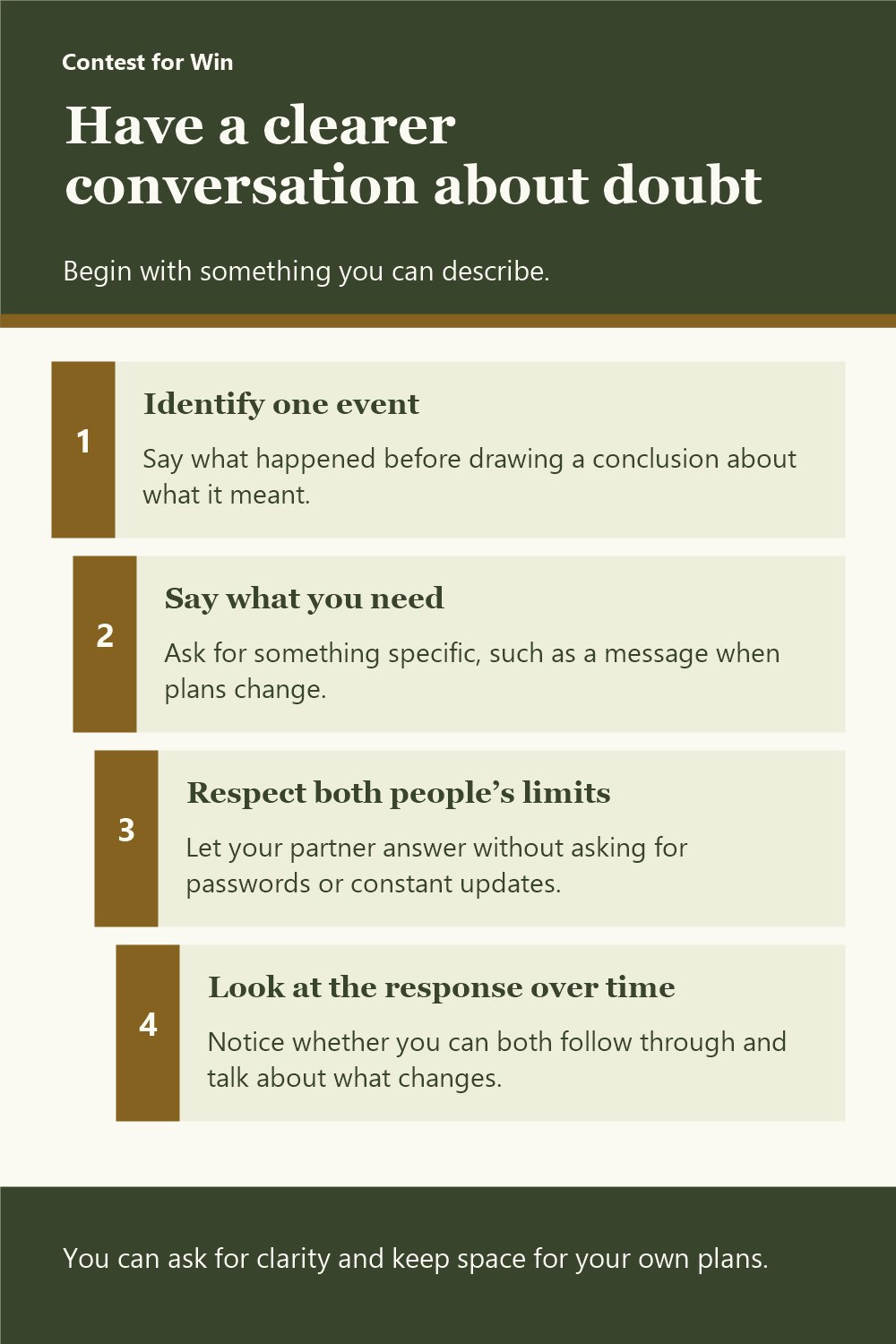
Have a clearer conversation about doubt Begin with something you can describe.
- Identify one event Say what happened before drawing a conclusion about what it meant.
- Say what you need Ask for something specific, such as a message when plans change.
- Respect both people’s limits Let your partner answer without asking for passwords or constant updates.
- Look at the response over time Notice whether you can both follow through and talk about what changes.
You can ask for clarity and keep space for your own plans.