

To resolve an everyday conflict, start with one concrete disagreement. If either person is too upset to listen, pause and agree when to return. When you come back, explain what happened, hear the other person’s concern and make a specific plan for next time.
Decide whether it’s safe to keep talking
A disagreement about plans is different from being threatened, prevented from leaving or afraid of retaliation. If you feel unsafe, prioritize getting to a safer place and speaking privately with someone you trust. The National Domestic Violence Hotline’s safety planning guide can help you think through options. You don’t have to agree to a private conversation or forgive someone to deserve support.

Pause with a plan to return
Say what you are pausing and when you can check in: “I’m struggling to listen right now. Could we come back to the grocery budget at seven?” Agree on a time you can both make. If you need to change it, let them know. During the break, do something that helps you settle rather than composing a list of everything the other person has done wrong.
Use one example and one request
“The grocery order went in before I saw it, and it put us over the amount we planned” gives both people something concrete to discuss. “You never listen” is much harder to answer. Ask the other person to describe what they understood before you offer a solution. The University of Florida’s constructive conflict guide offers more ways to keep the discussion focused.
Work through an ordinary disagreement
Imagine Jo made the grocery order early because a delivery slot was about to close. Ellis thought they had agreed to check the order together. They’ve both been arguing about how much the other cares. After a break, Jo explains why they put it through. Ellis explains how the unexpected cost affected their plans. They agree that whoever places the order will text a screenshot of the total first, and that either can choose a cheaper order if there isn’t time to get an answer. They agree to see how this works after two weeks.
If you hurt the other person, say exactly what you did, name its effect and explain what you’ll do differently. You can own your part while still asking the other person to address theirs.
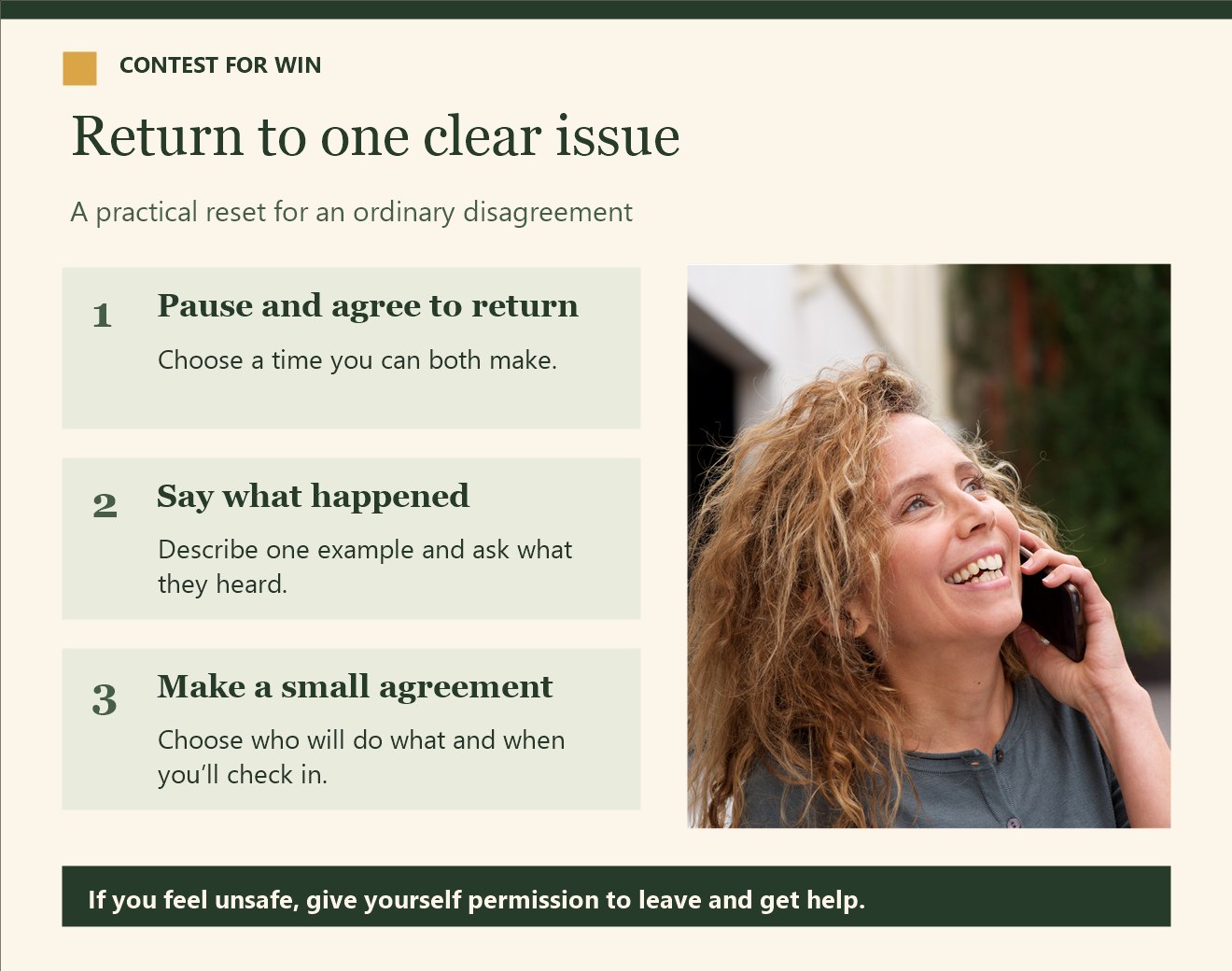
Read the infographic in text
Return to one clear issue
A practical reset for an ordinary disagreement
- Pause and agree to return Choose a time you can both make.
- Say what happened Describe one example and ask what they heard.
- Make a small agreement Choose who will do what and when you’ll check in.
If you feel unsafe, give yourself permission to leave and get help.
Frequently asked questions
1. How long should a break in an argument last?
Agree on a return time that lets both people settle and fits the situation. If you need longer, say so and suggest a new time. Take space and seek support if it feels unsafe to keep talking.
2. Can I handle a disagreement in writing?
A short written message can help if you need time to organize your thoughts or agree on logistics. Discuss what format works for both of you and keep the message focused on one issue.
3. What should I include in an apology?
Name what you did and acknowledge its effect. Say what you will do differently and give the other person room to decide what they need.
4. What if we keep having the same argument?
Look for the point where the plan breaks down. Try one change you can observe, then check whether it happened and whether it made the issue easier for both people.
5. Do I have to finish the conversation if I feel unsafe?
You can leave or end a conversation whenever you need to. If you worry about threats or retaliation, contact a trusted person or an abuse support service privately when it is safe.