

Elective co-parenting is when people plan to raise a child together without being romantic partners. They might already know one another or meet while looking for a co-parent. What matters is whether the adults can give a child consistent care and work through disagreements over time.

Walk through a school week and an emergency
Ask where the child would live, who would take them to appointments and what happens when they’re sick and both adults have work. Talk through holidays, money, childcare, the role of relatives and what you want the child to know about how your family came together.
Talk about changes you can’t predict
What would you do if someone wanted to move, took a job with different hours or had another child? Agree on how you’d revisit decisions and whether you’d ask a neutral professional for help if discussions stall. Pay attention to how each person handles small disagreements now.
Get legal advice before anyone makes a commitment
How legal parentage is established varies by jurisdiction. It can depend on the circumstances of conception and the documents or court steps required where you live. Before trying to conceive or entering an arrangement, each prospective parent can consult an independent family-law attorney with relevant experience. Ask about parentage, decision-making, support and how the arrangement might be affected by moving. The Uniform Law Commission’s parentage act materials describe a model that U.S. states can adopt or adapt.
Keep the child’s needs at the centre
A workable plan makes room for secure care, a predictable routine and the child’s views as they grow. When you disagree, ask which options would be easiest for the child to live with. See also practical ways to share responsibilities and protect time to rest.
Read the infographic in text
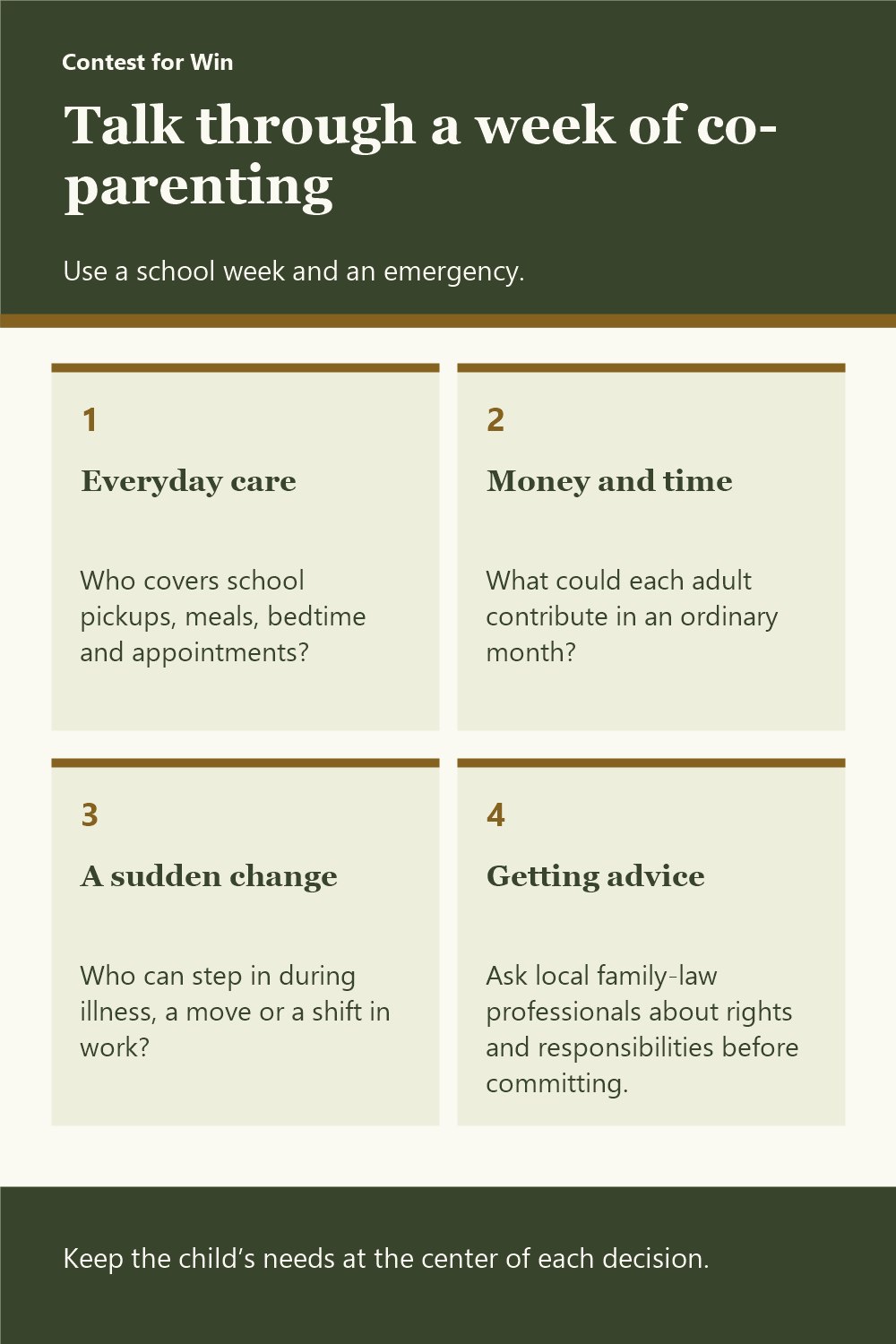
Talk through a week of co-parenting Use a school week and an emergency.
- Everyday care Who covers school pickups, meals, bedtime and appointments?
- Money and time What could each adult contribute in an ordinary month?
- A sudden change Who can step in during illness, a move or a shift in work?
- Getting advice Ask local family-law professionals about rights and responsibilities before committing.
Keep the child’s needs at the center of each decision.