

If you keep having the same argument about money, start with one recent decision. A conversation about a bill, a purchase or a change in income gives you something concrete to work on. Ask what mattered to each person before deciding what should happen next.
Work out what you are disagreeing about
One person may want to keep a larger cushion because their income is unpredictable. The other may feel that every enjoyable purchase is treated as irresponsible. Try asking, “What are you worried will happen if we do it my way?” Then explain your own concern in similar terms. Past experiences can help explain a preference. Your partner gets to say whether they matter here.
Choose one decision for this week
Set aside fifteen minutes and pick one bill or decision that affects you both. Check the due date, what is available and what each person can reasonably contribute. Write down who will do what and when you’ll review it. If the numbers are still uncertain, agree on what information you each need and when you’ll come back to it.
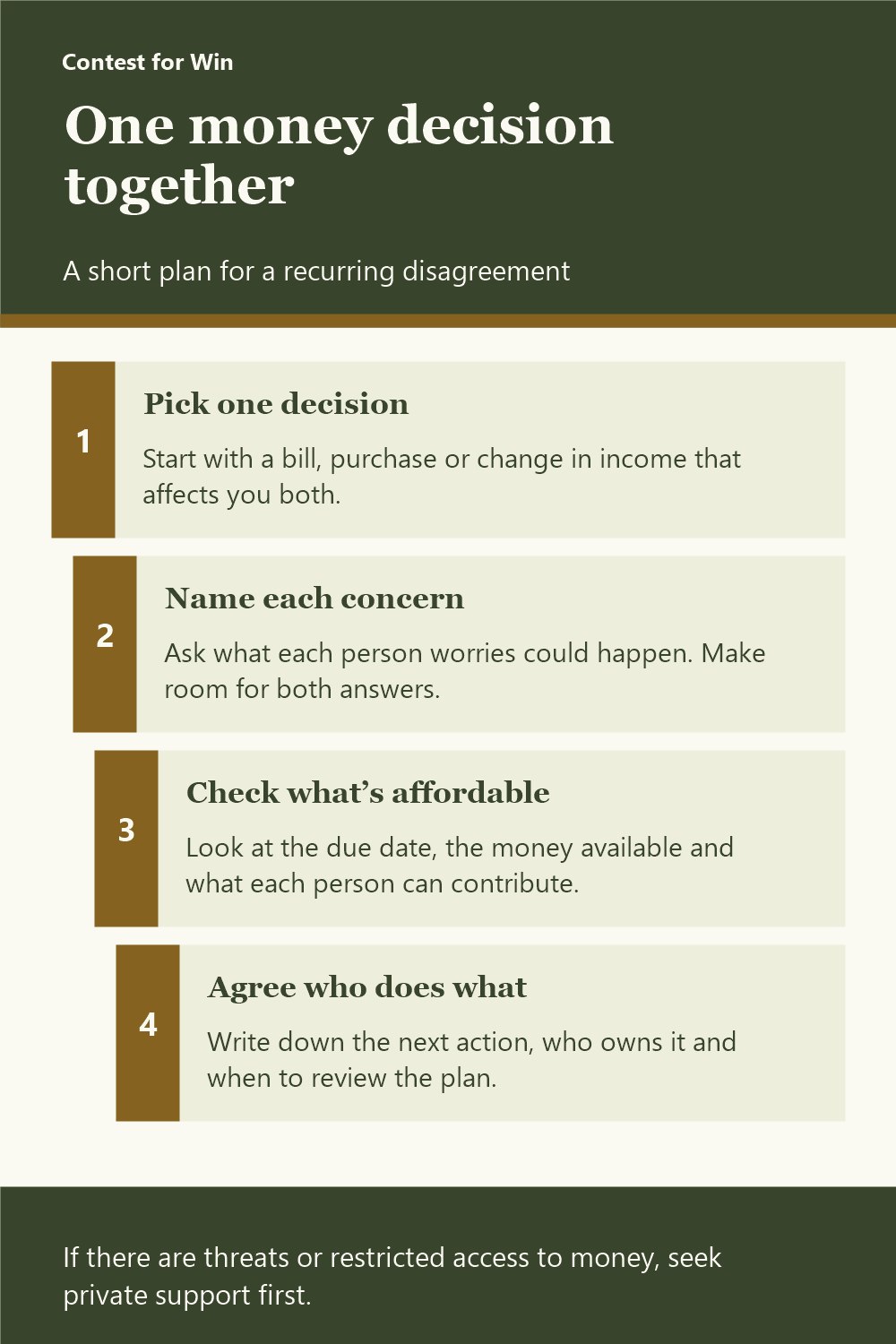
Read the infographic in text
One money decision together
- Pick one decision Start with a bill, purchase or change in income that affects you both.
- Name each concern Ask what each person worries could happen. Make room for both answers.
- Check what’s affordable Look at the due date, the money available and what each person can contribute.
- Agree who does what Write down the next action, who owns it and when to review the plan.
If there are threats or restricted access to money, seek private support first.
Leave room for each person
Splitting a cost equally may feel reasonable when your circumstances are similar. If income, caring responsibilities or essential expenses differ, talk through what each arrangement would leave each person able to afford. A useful agreement gives both people access to the information they need, a say in shared decisions and room to raise concerns.

Take restrictions and threats seriously
If your partner takes your income, blocks access to money or pressures you into debt, consider getting private support before trying a joint discussion. Talk to someone you trust or a local domestic abuse service from a device or account you can use safely.