

Start by checking which bills are due before your next payday. Once you know what those bills and everyday essentials will cost, you can decide how much room you have for savings and spending on things you enjoy.

1. Put your bills and income on the same calendar
Write down when income arrives and when rent, utilities, debt payments and other essentials are due. Look at a few months of spending so expenses like car registration or school supplies don’t come as a surprise.
2. Give your savings a specific purpose
Choose one first target, such as setting aside money for an unexpected repair. Start with an amount that fits after essential expenses. The Consumer Financial Protection Bureau’s guide to emergency savings explains how to set a goal when income varies.
3. Pick a transfer you can maintain
If your pay is predictable, you could schedule a small transfer after payday. Check your balance and upcoming bills first, especially if an automatic transfer could trigger an overdraft. If income varies, decide what you can set aside each time you’re paid.
4. Make room for some flexible spending
When there’s money left, set aside an amount for something you’ll enjoy this week. Decide in advance how much you want to spend so you can choose a meal out or an activity without having to rethink the whole budget.
5. Adjust when your circumstances change
Try the plan for one pay cycle, then compare it with what actually happened. If essentials cost more than you expected, update that estimate. Lowering or pausing a savings transfer can be part of keeping a plan workable.
Related reading: How to Talk About Money When You and Your Partner Disagree.
Read the infographic in text
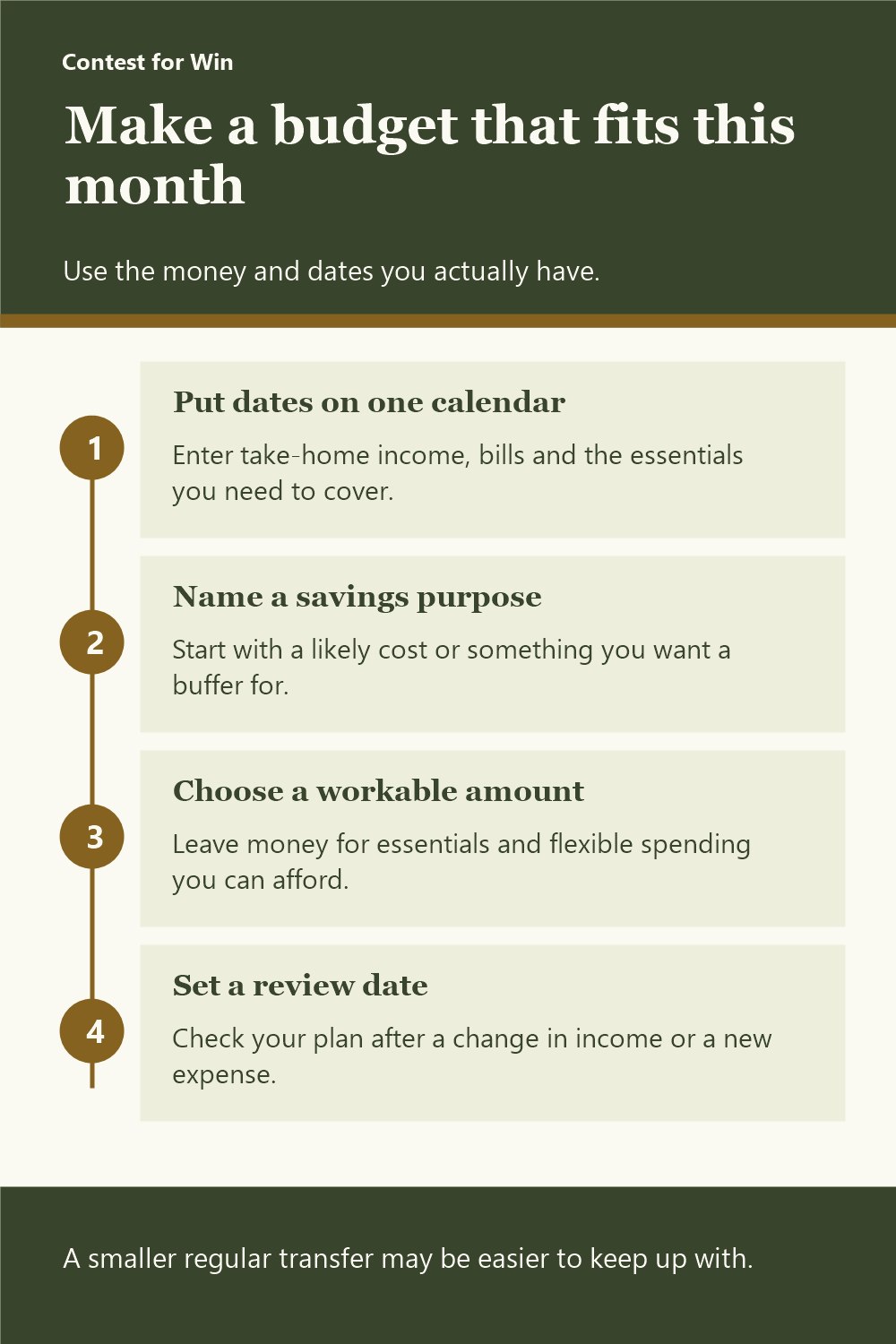
Make a budget that fits this month Use the money and dates you actually have.
- Put dates on one calendar Enter take-home income, bills and the essentials you need to cover.
- Name a savings purpose Start with a likely cost or something you want a buffer for.
- Choose a workable amount Leave money for essentials and flexible spending you can afford.
- Set a review date Check your plan after a change in income or a new expense.
A smaller regular transfer may be easier to keep up with.