

Emotional Freedom Techniques, often called EFT or tapping, combines light tapping with attention to a feeling or concern. Some people use it as a way to pause when they feel stressed. Whether it feels helpful varies from person to person.
What the research can tell you
In one randomised trial with nurses during the COVID-19 pandemic, participants who received a tapping session reported less distress right after it than those in the comparison group. A short-term change in one group leaves open how long any benefit lasts or which part of the session contributed to it.
Try it gently if it appeals to you
Choose an ordinary worry that feels manageable. Notice where you feel tension and, if it’s comfortable, tap lightly on the side of your hand while saying what you’re experiencing: “I’m tense about tomorrow’s meeting.” Pause after a few moments and see how you feel. You can stop or move your attention to what you see in the room if focusing on the worry makes it harder.
Get help if anxiety keeps interfering with your life
If worry or panic keeps coming back, disrupts sleep or makes it difficult to do things you need to do, talk to a healthcare professional. They can help you understand what’s happening and discuss treatment options. Read more about assessment and support for panic attacks or practical ways to respond to stressful days.
Read the infographic in text
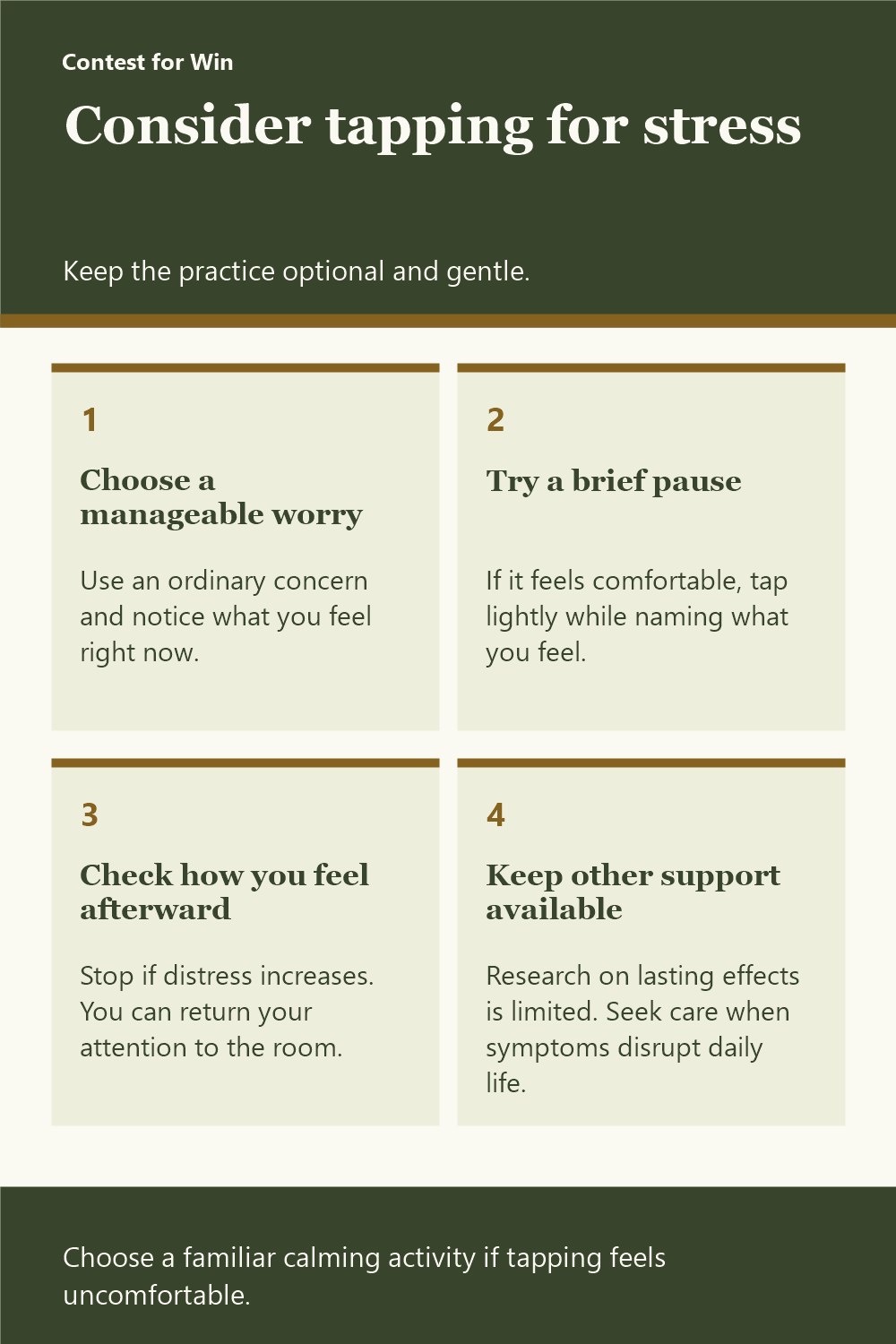
Consider tapping for stress Keep the practice optional and gentle.
- Choose a manageable worry Use an ordinary concern and notice what you feel right now.
- Try a brief pause If it feels comfortable, tap lightly while naming what you feel.
- Check how you feel afterward Stop if distress increases. You can return your attention to the room.
- Keep other support available Research on lasting effects is limited. Seek care when symptoms disrupt daily life.
Choose a familiar calming activity if tapping feels uncomfortable.